
Starting a new language feels exciting, right up until you try to answer one simple question: what, exactly, are you trying to do?
A lot of beginners say, “I want to be fluent,” but that goal is too big to guide your next study session. When the target stays fuzzy, motivation drops fast, and burnout shows up early.
The fix is simpler than most people think. If you set goals that match your life, your reason, and your actual time, you’ll notice progress sooner and stick with it longer.
Start with your real reason for learning the language
The best beginner goal isn’t the one that sounds impressive. It’s the one you’ll use in real life.
Maybe you want to speak with relatives, order food on a trip, pass a class, or understand song lyrics without checking translations every minute. Those reasons lead to different goals, and that’s a good thing. A travel goal doesn’t need the same plan as a school goal.
Current language learning advice in 2026 leans toward this kind of personal focus. Instead of trying to learn everything, beginners do better when they study what matters most to them first. That’s also why short, focused routines now beat long, generic sessions for many learners. If you want a good example of realistic pacing, this three-month language roadmap shows how smaller outcomes make more sense than chasing fluency from day one.

Pick one main reason, so your goal stays clear
Trying to learn for travel, work, movies, grammar, and conversation all at once sounds ambitious. In practice, it usually creates a blurry plan.
Pick one main reason first. Think of it like choosing a lane on a highway. You can change lanes later, but starting in five lanes at once gets messy fast.
For example, if you’re learning for travel, your first goal might be to ask for directions, check into a hotel, and order meals. If you’re learning for family, your goal might be reading short messages and answering with simple sentences.
That single focus gives your study time a job. It helps you choose the right words, phrases, and practice tasks.
Match your goal to beginner-level skills you can actually build
A beginner can make solid progress quickly, but the progress needs the right shape. “Speak like a native” isn’t a beginner goal. “Introduce myself and ask basic questions” is.
Here are the kinds of outcomes that fit early study:
- Basic greetings and polite phrases
- Simple self-introductions, like name, job, and where you live
- Common travel tasks, like ordering food or asking the price
- Everyday listening, like catching familiar words in slow speech
- Short conversations, even if they last only two minutes

Those goals are easier to picture, and that matters. If you can imagine success, you’re more likely to work toward it. A simple beginner plan like this step-by-step language learning guide shows how small skill targets keep the process clear.
A good beginner goal should feel a little challenging, not impossible.
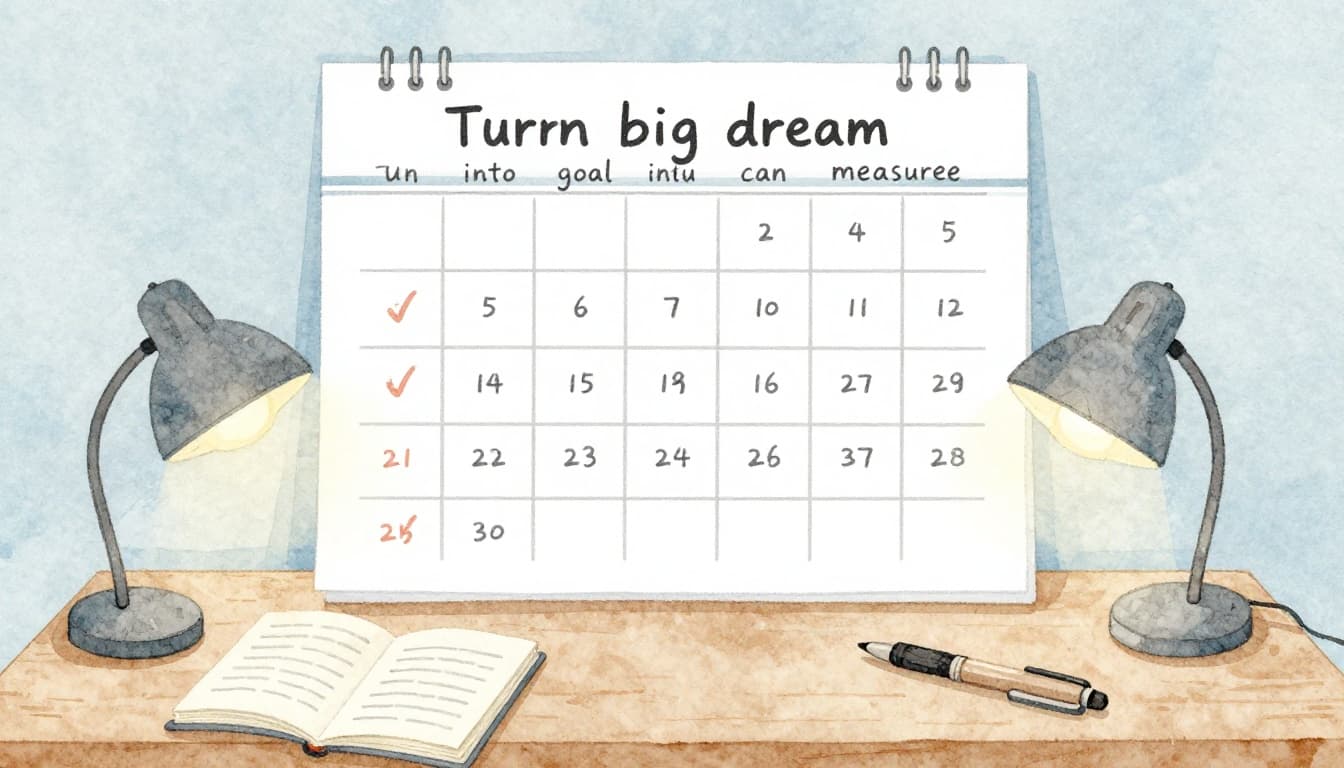
Turn a big dream into a goal you can measure
Big dreams are useful. They give you direction. Still, a dream is not a study plan.
That’s where SMART goals help. The idea is simple: turn a vague wish into something you can track. The University of Oregon’s SMART goals guide explains the framework well, but the short version is this:
- Specific means you know exactly what you’re working on.
- Measurable means you can count or check it.
- Achievable means it fits your real energy and schedule.
- Relevant means it supports your real reason for learning.
- Time-bound means there’s a deadline.
Use the SMART framework to make your goal specific and doable
Here’s a quick side-by-side example:
| Vague goal | SMART version |
|---|---|
| I want to learn Spanish | I want to learn 100 core Spanish words in 30 days |
| I want to speak better | I will practice speaking for 10 minutes, 5 days a week |
| I want to understand shows | I will understand the main idea of one short beginner video each week |
The second column tells you what to do next. That’s the whole point.
Let’s say your reason is travel. A SMART goal could be: “In 8 weeks, I will learn 80 travel words, practice 5 common restaurant phrases, and hold a 2-minute role-play conversation twice a week.”
That goal is clear. It also fits a beginner brain. You’re not trying to memorize a dictionary. You’re learning a small set of useful things and repeating them often.
Break one 3-month goal into weekly targets
A 3-month goal works well for beginners because it’s long enough to see progress, but short enough to stay real.
For example, if your 3-month goal is to handle basic travel conversation, your weekly targets might look like this:
- Week 1, learn greetings and numbers
- Week 2, practice ordering food
- Week 3, work on directions and transport
- Week 4, review and speak out loud
- Then repeat the pattern with new words and simple grammar
You can also split each week into one vocabulary target, one grammar point, one listening task, and one speaking task. That keeps your plan balanced without making it feel like homework from four different classes.
Small targets also protect your motivation. When you finish a week and can point to a result, you feel movement. That’s a lot more helpful than waiting months for some vague idea of fluency.
Build a study plan that fits your real schedule
The best plan is the one you’ll keep.
Many beginners quit because they build a fantasy routine. Two hours every night sounds strong on paper. Then work gets busy, dinner runs late, and the plan falls apart by Thursday.
The better approach in 2026 is shorter, repeatable practice. Speaking from day one, short lessons, and regular review now show up in most beginner advice. For many people, 3 to 5 hours per week is enough for steady early progress, especially when the practice is focused.
Choose a daily habit small enough to keep
Think small on purpose. Ten to fifteen minutes a day works better than one giant session on Sunday.
A short routine might look like this: review ten words, do one short lesson, then say three sentences out loud. That’s not flashy, but it builds memory and confidence. Daily contact helps because your brain gets repeated exposure. Cramming once a week is like watering a plant with a bucket once a month.
Beginners also do better when they start speaking early. That doesn’t mean deep conversations on day two. It means reading aloud, repeating phrases, or doing tiny role-plays from the start.
Use simple tools to track progress without overcomplicating it
You don’t need a giant system. A notebook, a habit tracker, or a simple app is enough.
Many beginners use Duolingo for short lessons and Anki for spaced repetition. Others add podcasts, music, or beginner shows for light immersion. Tools help, but they should support your goal, not distract from it. If you spend more time choosing apps than studying, the tool is now the hobby.
For a current overview of what beginners are using, this 2026 language app guide gives a helpful breakdown of speaking, vocabulary, and listening tools.
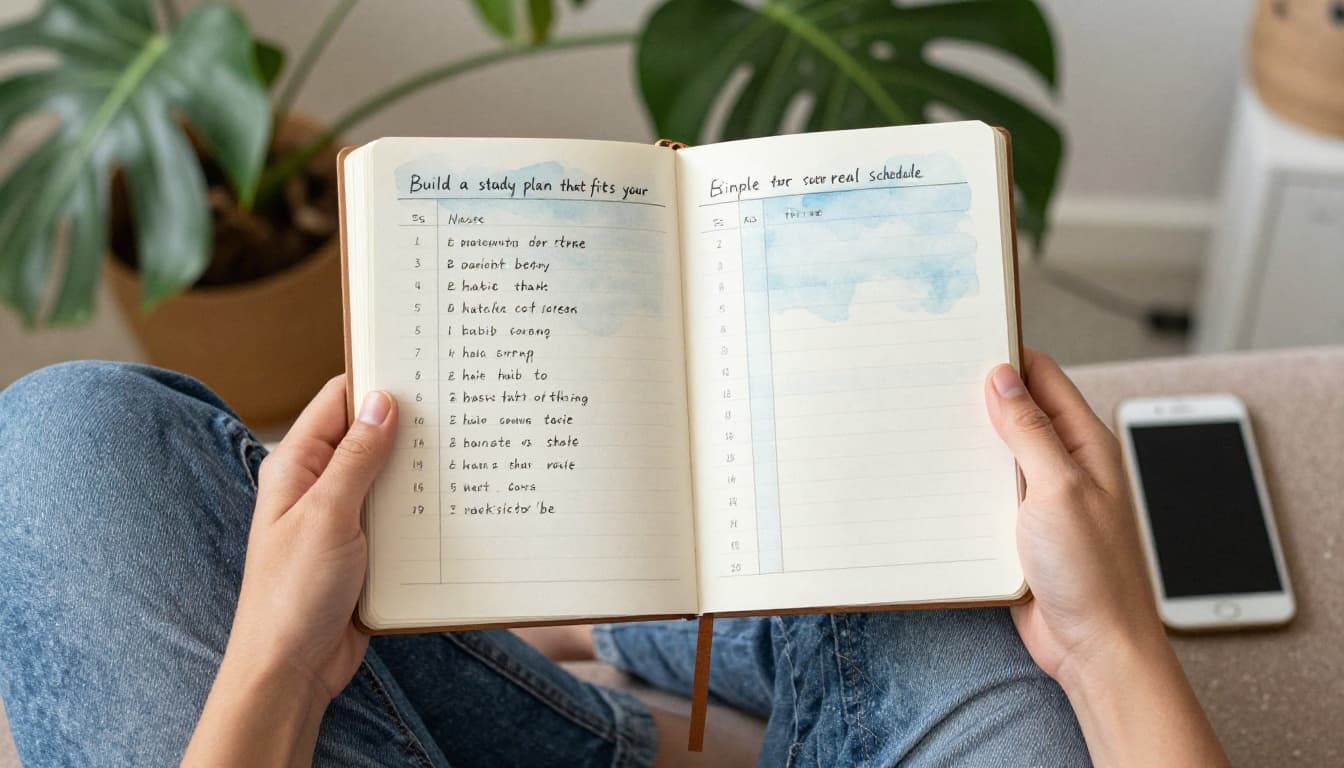
Keep tracking simple. Mark study days, note new words, and record short speaking clips once a week. That’s enough to show growth without turning learning into a spreadsheet project.
Avoid the beginner mistakes that make goals feel impossible
Most people don’t quit because they’re bad at languages. They quit because their goals were too large, too vague, or too heavy for real life.
That doesn’t mean you failed. It means your plan needs a better fit.
Stop chasing fluency too fast
“Fluent” sounds exciting, but it’s a poor first goal. It’s too broad, and different people mean different things by it.
A better early target is an A1 or A2-style outcome. That could mean introducing yourself, talking about daily routines, understanding common phrases, or handling a short conversation with patience and repetition.
This shift matters because clear milestones feel real. You can tell when you’ve reached them. If your goal is only fluency, every study session can feel like you’re still far away. Articles on common language learning mistakes often point to this exact problem: people aim so high, so fast, that they miss the progress happening right in front of them.
Adjust your goals when life changes, instead of giving up
Life will interrupt your plan. That’s normal.
If a busy week hits, reduce the target instead of dropping it. Turn “study 30 minutes a day” into “review 10 flashcards and say three phrases out loud.” If work gets chaotic for a month, switch from five study days to three.
That change is not weakness. It’s smart goal setting.
Try a quick weekly or monthly review. Ask yourself: Is this goal still clear? Is it still realistic? Do I need to shrink it for now? A lot of learners stay consistent by adjusting early instead of disappearing for six weeks.
Changing the plan is often how you protect the goal.
Language learning isn’t a straight road. It’s closer to a long walk with weather changes. You still move forward, even if the pace changes.
A realistic goal can carry you farther than a dramatic one. Start with one honest reason, turn it into something you can measure, and keep the plan small enough to survive a normal week.
If you feel overwhelmed, lower the bar and keep moving. Consistency beats perfection every time.
Pick one simple language goal today, write it down, and do the first 10 minutes.